Blood-Brain Barrier and Gene Delivery
Exploring the biology of the blood-brain barrier, molecular transport mechanisms and emerging strategies for targeted gene delivery to the central nervous system. Discover how viral vectors, engineered carriers and innovative delivery technologies are advancing brain-targeted genetic research.
What Is the Blood-Brain Barrier?
The blood-brain barrier (BBB) is a highly specialized biological interface that separates circulating blood from the brain's extracellular environment. Located primarily at the microvascular endothelium of the central nervous system (CNS), it regulates the movement of molecules between the bloodstream and neural tissue.
By controlling the entry of nutrients, ions and selected signaling molecules while restricting many potentially harmful substances, the BBB helps maintain the stable environment required for neuronal activity and brain function.
This selective permeability also creates a major scientific challenge: delivering genetic material, therapeutic proteins and gene therapy vectors to specific regions and cell populations within the brain.
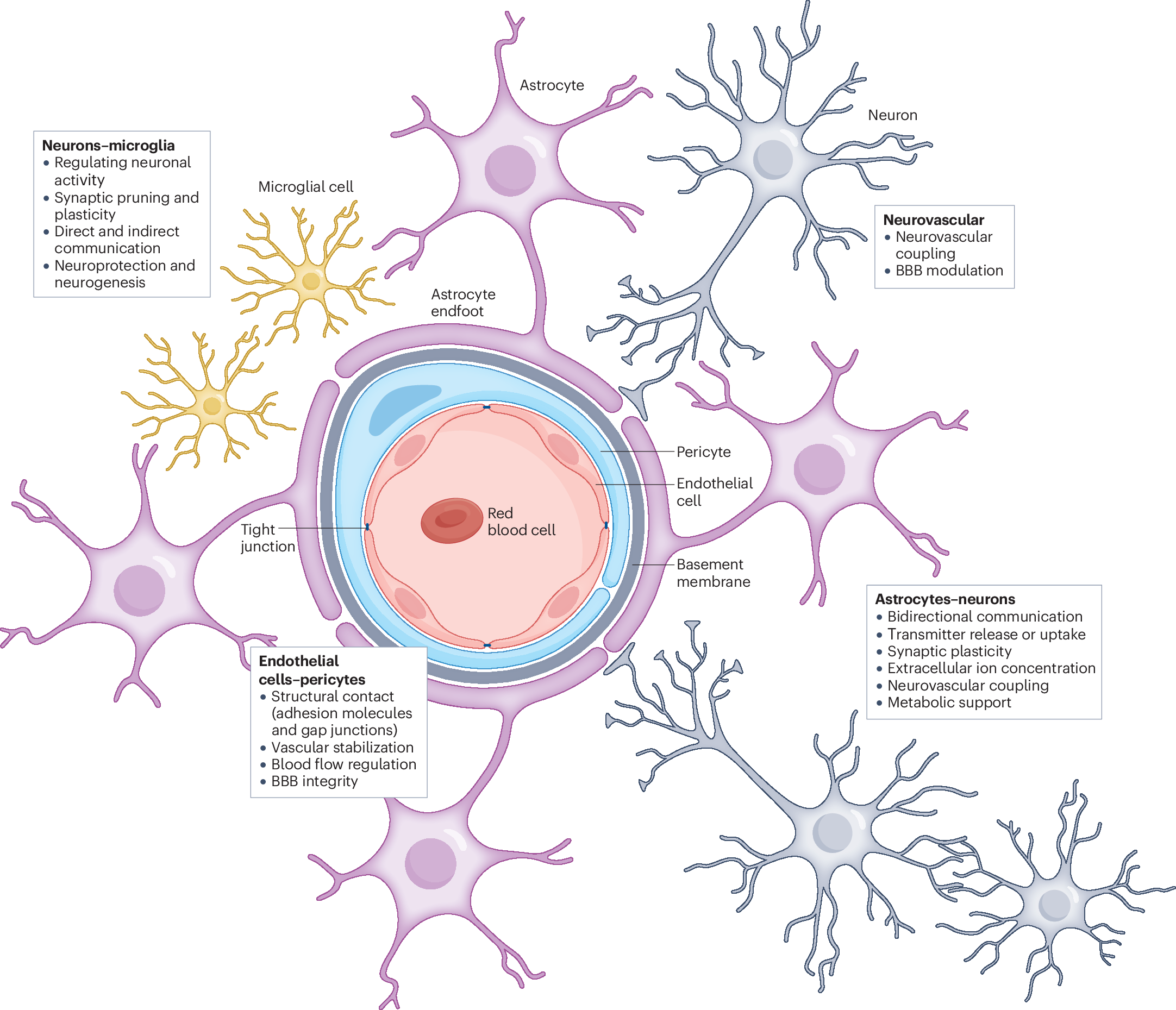
Structure and Cellular Components of the BBB
The blood-brain barrier is not simply a physical wall. It is a coordinated neurovascular structure composed of specialized endothelial cells, pericytes, astrocytes and basement membrane components. Together, these elements form the neurovascular unit and contribute to barrier integrity, molecular transport and vascular regulation.
Brain Endothelial Cells
Specialized endothelial cells line cerebral blood vessels. Their tight junctions, low rates of nonspecific vesicular transport and selective transport proteins regulate molecular exchange between blood and brain tissue.
Tight Junction Proteins
Claudins, occludin and junctional scaffolding proteins such as ZO-1 contribute to the tight junction complexes that restrict paracellular passage between adjacent endothelial cells.
Pericytes
Pericytes are vascular-associated cells embedded within the microvascular basement membrane. They support endothelial function, vascular stability and blood-brain barrier maintenance.
Astrocytes
Astrocytic end-feet interact with cerebral blood vessels and contribute to the regulation of barrier properties, neuronal homeostasis and neurovascular signaling.
Basement Membrane
This specialized extracellular matrix provides structural support to cerebral microvessels and contributes to interactions between endothelial cells and surrounding vascular-associated cells.
Transporters and Receptors
Selective transport proteins, receptor systems and efflux pumps control the movement of nutrients and other molecules across the endothelial barrier.
How Do Molecules Cross the Blood-Brain Barrier?
BBB transport mechanisms determine which substances can move from the circulation into the central nervous system. Understanding these pathways is fundamental to designing brain-targeted gene delivery technologies and improving vector distribution.

Major BBB Transport Pathways
Several biological mechanisms contribute to the selective transport of molecules across brain endothelial cells:
- Passive transcellular diffusion: Allows certain small, lipid-soluble molecules to cross endothelial cell membranes.
- Paracellular transport: Movement between adjacent cells, normally strongly restricted by tight junctions.
- Carrier-mediated transport: Uses specialized proteins such as glucose and amino acid transporters.
- Receptor-mediated transcytosis: Receptor binding initiates vesicular uptake and transport across endothelial cells.
- Adsorptive-mediated transcytosis: Involves interactions between positively charged molecules and endothelial cell surfaces.
- Efflux transport: Pumps such as P-glycoprotein can move selected compounds back toward the bloodstream.
| Transport mechanism | Biological principle | Relevance to CNS delivery |
|---|---|---|
| Passive diffusion | Movement across endothelial membranes according to physicochemical properties and concentration gradients. | Relevant to selected small molecules, but generally insufficient for large genetic payloads. |
| Carrier-mediated transport | Recognition and transport through specific membrane carrier proteins. | Provides biological inspiration for designing transport-compatible delivery systems. |
| Receptor-mediated transcytosis | Receptor binding followed by vesicular trafficking across endothelial cells. | A major strategy investigated for brain-targeted vectors and molecular carriers. |
| Adsorptive-mediated transcytosis | Electrostatic interactions facilitate cellular uptake and vesicular transport. | Investigated for engineered peptides and nanocarrier systems. |
| Efflux transport | Active transport of selected substrates out of endothelial cells. | Can reduce the accumulation of certain compounds in brain tissue. |
Why Is BBB Gene Delivery So Challenging?
Gene delivery to the brain involves more than transporting a vector into the circulation. A successful delivery platform must interact with the vascular interface, cross or bypass relevant biological barriers, reach the intended CNS tissue and support appropriate cellular uptake and genetic expression.
Large genetic payloads, including plasmid DNA, RNA-based constructs and viral vectors, cannot simply diffuse through an intact blood-brain barrier. Their delivery requires specialized approaches that account for vector structure, receptor interactions, tissue distribution and cellular tropism.

Limited BBB Permeability
The highly selective endothelial barrier restricts access of many large molecules and genetic delivery platforms to the brain.
Vector Biodistribution
Systemically administered vectors may distribute to peripheral organs, limiting the proportion reaching the intended CNS tissues.
Cellular Tropism
Efficient brain entry does not automatically guarantee effective transduction of the intended neuronal or glial cell population.
Immune Recognition
Pre-existing antibodies, immune responses and vector-associated biological interactions can influence delivery efficiency and safety.
Genetic Payload Capacity
Different vector platforms have distinct packaging capacities and limitations that influence genetic construct design.
Species Differences
Receptor expression, vector tropism and transport behavior may differ between animal models and human tissues.
Innovative Strategies for CNS-Targeted Gene Delivery
Research in blood-brain barrier gene delivery is exploring approaches that improve vector transport, cellular specificity and genetic payload distribution. These strategies include engineered viral capsids, receptor-targeted carriers, non-viral platforms and localized delivery technologies.

AAV Vector Engineering
Adeno-associated virus (AAV) vectors are widely investigated for CNS gene delivery. Capsid engineering can modify receptor interactions, tissue tropism and vector distribution.
Keywords: AAV gene delivery, AAV capsid engineering, AAV9 brain delivery.
Receptor-Mediated Transcytosis
Engineered vectors and molecular carriers can be designed to interact with BBB-associated receptors, including transferrin receptor pathways, to investigate transport across endothelial cells.
Keywords: transferrin receptor, receptor-mediated transcytosis, BBB targeting.
Focused Ultrasound
Focused ultrasound combined with microbubbles is being investigated as a method for temporarily and locally modulating BBB permeability, potentially supporting targeted CNS delivery.
Keywords: focused ultrasound BBB, ultrasound-mediated gene delivery.
Lipid Nanoparticles
Lipid nanoparticles and other non-viral carriers are being investigated for transporting nucleic acids, including RNA and other genetic payloads, toward CNS targets.
Keywords: lipid nanoparticles CNS, non-viral gene delivery, RNA delivery.
Intrathecal and CSF Delivery
Administration into cerebrospinal fluid offers an alternative route for CNS delivery. Intrathecal and intracerebroventricular approaches can bypass the need for a vector to cross the BBB from systemic circulation, although tissue distribution remains an important consideration.
Keywords: intrathecal gene delivery, CSF gene therapy, CNS vector administration.
Brain-Targeted Nanocarriers
Functionalized nanoparticles, peptides and biomolecule-based carriers are being developed to exploit biological transport pathways and improve the targeting of genetic materials.
Keywords: brain-targeted nanoparticles, BBB penetrating carriers, CNS nanotechnology.
AAV Vectors and Brain-Targeted Gene Therapy
Adeno-associated virus vectors are important platforms in neurological gene therapy research because they can deliver genetic material to different cell types in the nervous system. Their properties can be modified through capsid engineering and vector design.
AAV9 has attracted particular interest in CNS research because of its ability to access neural tissues under certain administration conditions. However, the extent and distribution of brain transduction depend on species, dose, age, route of administration and biological context.
Newer research investigates receptor-informed capsid engineering, including transferrin receptor-associated approaches, to improve transport across brain endothelial cells. Translation from experimental models to human applications remains a central research challenge.

Applications of Blood-Brain Barrier Research
Improved understanding of BBB biology and gene delivery mechanisms supports research across neurological genetics, neurodegeneration, molecular neuroscience and advanced genetic engineering.
Neurodegenerative Research
Investigation of genetic delivery approaches relevant to Alzheimer's disease, Parkinson's disease, Huntington's disease and other neurodegenerative research models.
Inherited Neurological Conditions
Research into gene replacement, gene regulation and targeted genetic strategies for inherited neurological conditions.
Neuronal and Glial Targeting
Studying the delivery of genetic material to neurons, astrocytes, oligodendrocytes and other CNS cell populations.
Neurovascular Biology
Understanding endothelial signaling, vascular permeability, neurovascular interactions and BBB regulation.
Gene Regulation
Exploring gene expression, RNA-based technologies and molecular approaches for modifying cellular pathways.
Preclinical Vector Evaluation
Assessing vector distribution, tissue specificity, transduction, expression and biological responses in experimental models.
The Future of Blood-Brain Barrier Gene Delivery
The development of more selective and efficient CNS gene delivery platforms will depend on a deeper understanding of endothelial transport, receptor biology, vector-host interactions and neurovascular physiology.
Emerging research is combining computational protein design, high-throughput capsid screening, single-cell analysis and advanced imaging to study vector behavior and identify cell-specific delivery opportunities.
Integration of these technologies may help researchers design delivery systems with improved tissue distribution, more precise cellular targeting and better-defined biological profiles.

Frequently Asked Questions About BBB Gene Delivery
Explore essential concepts in blood-brain barrier biology and CNS-targeted genetic delivery.
What is blood-brain barrier gene delivery?
Blood-brain barrier gene delivery refers to the development of strategies that transport genetic material, such as DNA or RNA, toward the central nervous system while addressing the selective permeability of the BBB. Approaches include engineered viral vectors, non-viral carriers and alternative administration routes.
Why does the blood-brain barrier restrict gene therapy vectors?
The BBB contains specialized endothelial cells with tight junctions, limited nonspecific vesicular transport and selective molecular transport systems. These characteristics restrict the entry of many large biological molecules and vector platforms.
Can AAV vectors cross the blood-brain barrier?
Certain AAV capsids, including AAV9, have demonstrated CNS access under specific experimental conditions. However, crossing and distribution depend on capsid properties, species, administration route, dose and other biological factors. Engineered AAV variants are being investigated to improve brain targeting.
What is receptor-mediated transcytosis?
Receptor-mediated transcytosis is a cellular transport process in which a molecule binds to a receptor on one side of an endothelial cell, is internalized into vesicles and may be transported to the opposite side. It is being investigated as a strategy for delivering large molecules and gene carriers across the BBB.
What is the role of the transferrin receptor in BBB targeting?
The transferrin receptor is expressed by brain endothelial cells and participates in iron-related transport biology. Researchers are investigating receptor-binding ligands and engineered AAV capsids to exploit transferrin receptor-associated pathways for CNS delivery.
What is the difference between systemic and intrathecal gene delivery?
Systemic administration introduces a vector into the circulation, requiring it to reach and access the CNS. Intrathecal administration delivers a vector into cerebrospinal fluid, providing an alternative route that does not require crossing the BBB from the bloodstream. Both approaches have distinct distribution and delivery challenges.
How does focused ultrasound support CNS gene delivery?
Focused ultrasound, commonly studied with microbubbles, can temporarily and locally modulate BBB permeability. This technique is being investigated for spatially controlled delivery of selected molecules and gene therapy vectors.
What are the main challenges in brain-targeted gene delivery?
Major challenges include BBB permeability, vector biodistribution, cellular tropism, immune recognition, genetic payload capacity, expression control and differences between animal models and human biology.
Related Research Topics
Continue exploring scientific developments in gene therapy, neurogenetics and central nervous system research.
Explore the Science Behind Brain-Targeted Gene Delivery
Discover the biological mechanisms, vector engineering approaches and emerging technologies shaping the future of neurological gene therapy research.
Explore Scientific Articles →