Alzheimer's Disease Research: Latest Scientific Advances, Biomarkers and the Future
Explore the latest Alzheimer's disease research, including blood biomarkers, amyloid-beta, tau protein, neuroinflammation, genetics, AI, and emerging scientific advances

Discover the latest developments in Alzheimer research, from blood-based biomarkers and tau protein to emerging therapeutic strategies, artificial intelligence, and precision neuroscience.
Alzheimer's disease is one of the most extensively studied neurodegenerative disorders and a major focus of neuroscience, molecular biology, biotechnology, and biomedical research worldwide. Characterized by progressive changes in memory, cognition, behavior, and brain function, Alzheimer's disease involves complex interactions between amyloid-beta accumulation, tau pathology, neuronal dysfunction, neuroinflammation, genetic factors, and changes in brain connectivity.
Over the past several years, the scientific understanding of Alzheimer has evolved significantly. Advances in molecular biomarkers, blood-based testing, neuroimaging, proteomics, genomics, and targeted treatments are transforming how researchers investigate the disease and identify potential intervention points.
The latest research is moving beyond a single-pathway model toward a more comprehensive understanding of Alzheimer biology. New studies are examining how amyloid, tau, immune activity, vascular changes, metabolic dysfunction, and genetic variation interact throughout disease progression.
What Is Alzheimer's Disease? Understanding the Molecular Biology
Alzheimer is a progressive neurodegenerative disorder associated with changes in brain structure, neuronal communication, and molecular pathways involved in memory and cognitive function.
At the molecular level, two characteristic features are the accumulation of amyloid-beta plaques outside neurons and neurofibrillary tangles composed of abnormal tau protein inside neurons.

Amyloid-Beta and Plaque Formation
Amyloid-beta peptides are generated through the processing of amyloid precursor protein (APP). Changes in amyloid production, aggregation, clearance, and distribution can contribute to the accumulation of amyloid-beta species in the brain.
Amyloid-beta aggregation is a central component of Alzheimer's disease biology and has been an important target for research into disease-modifying treatments. Investigations continue to examine the roles of soluble oligomers, fibrils, plaque formation, and interactions with neuronal and glial cells.
Tau Protein and Neurofibrillary Tangles
Tau is a microtubule-associated protein involved in neuronal structure and intracellular transport. In Alzheimer, abnormal tau phosphorylation, conformational changes, aggregation, and altered cellular localization are associated with neuronal dysfunction.
Tau pathology is particularly important because its distribution across brain regions is closely associated with patterns of cognitive impairment and disease progression. Research targeting tau has therefore become an important complement to amyloid-focused strategies.
Neuroinflammation and Microglial Biology
Microglia are resident immune cells of the central nervous system. They participate in surveillance, clearance of cellular material, synaptic remodeling, and responses to tissue injury.
In Alzheimer's disease, microglial activity and inflammatory signaling may influence amyloid clearance, neuronal stress, synaptic integrity, and disease-associated biological pathways. Researchers are investigating how immune responses can be protective in certain contexts but potentially harmful in others.
Latest Alzheimer's Disease Research News and Scientific Advances
Recent research is highlighting new ways to identify biological changes, predict disease progression, discover molecular targets, and investigate treatment strategies.
New Blood Biomarker May Help Track Tau-Tangle Accumulation and Disease Progression
Research presented at the Clinical Trials on Alzheimer conference in November 2026 highlighted a blood biomarker called eMTBR-tau, which reflects aspects of tau-tangle accumulation in the brain.
Existing blood biomarkers, including amyloid-related markers and phosphorylated tau, have substantially advanced Alzheimer's disease research. However, researchers continue to investigate biomarkers that can better reflect the stage of tau pathology and help distinguish the presence of biological changes from the extent of disease progression.
The emerging eMTBR-tau research may contribute to improved biological staging, patient stratification, and clinical trial selection. The test remains investigational and is not currently established as a standalone clinical diagnostic tool.
Research keywords: eMTBR-tau, tau biomarkers, Alzheimer progression, blood-based biomarkers, tau pathology.
Read the latest research report →Circular RNA Biomarkers Could Improve Prediction of Symptomatic Alzheimer's Disease
A 2026 study published in Nature Medicine investigated blood-based circular RNAs (circRNAs) as potential biomarkers of Alzheimer progression.
Researchers reported that a model involving 34 circular RNAs could identify individuals with Alzheimer's pathology and provide information about progression toward symptomatic disease. In the study, the circRNA-based model showed promising predictive performance compared with a model using pTau217.
The findings are particularly interesting because many established biomarkers can identify Alzheimer's-associated pathology before clinical symptoms become apparent. Predicting when symptoms may emerge represents a different and important scientific challenge.
Circular RNA research could contribute to future biomarker panels, longitudinal monitoring, and the identification of participants for clinical research.
Explore the NIH research announcement →Multiomics and Genetic Data Reveal New Potential Alzheimer's Disease Drug Targets
Research published in Nature Neuroscience in October 2026 explored the integration of Alzheimer's disease genetic datasets, multiomics evidence, experimental models, and real-world electronic health data to identify potential therapeutic targets.
The study identified candidate molecular targets through genetic analyses and investigated selected mechanisms in induced pluripotent stem cell-derived neurons and cerebral organoid models.
This approach illustrates the growing importance of integrating genetics, transcriptomics, cellular biology, computational analysis, and patient data in Alzheimer's disease drug discovery.
Read the Nature Neuroscience study →Five-Year Lecanemab Data Highlight Long-Term Research Into Amyloid-Targeting Treatments
Long-term extension data presented in November 2026 reported outcomes from continued lecanemab treatment in participants with early Alzheimer's disease.
The findings contribute to ongoing investigations into amyloid-targeting treatments, the long-term trajectory of cognitive outcomes, and how treatment effects may change over time.
Interpretation of long-term extension findings requires consideration of study design, participants who remain in the extension, comparison methods, and the limitations of external natural-history datasets.
Read the five-year data announcement →Alzheimer's Disease Biomarkers: A New Era of Early Detection
Biomarker research is transforming Alzheimer's disease investigation by enabling the detection and characterization of biological processes associated with amyloid accumulation, tau pathology, neurodegeneration, inflammation, and neuronal injury.

pTau217
Phosphorylated tau 217 is an important blood-based biomarker investigated for its association with Alzheimer's disease pathology and amyloid-related changes.
Plasma Amyloid-Beta
Amyloid-beta 42 and amyloid-beta 40 measurements are being studied to evaluate amyloid-related biological changes and support biomarker-based research approaches.
Neurofilament Light Chain
Neurofilament light chain (NfL) is associated with neuronal injury and has been investigated across several neurodegenerative disorders, including Alzheimer's disease.
GFAP
Glial fibrillary acidic protein is associated with astrocytic activity and is being investigated as a biomarker of glial responses and neurodegenerative processes.
Blood-Based Biomarkers and Precision Research
Blood-based biomarkers offer opportunities for scalable molecular assessment compared with more invasive or resource-intensive procedures. Their development may support research screening, participant selection, longitudinal monitoring, and the characterization of biological subgroups.
However, biomarker interpretation depends on assay validation, analytical performance, clinical context, and the specific biological question being investigated. A biomarker associated with pathology is not necessarily a direct measure of cognitive function or an individual's future clinical outcome.
Amyloid and Tau: Moving Toward Combination Research Strategies
Amyloid-beta and tau remain central to Alzheimer's disease research. However, growing evidence suggests that different biological mechanisms may contribute to disease progression at different stages and across different individuals.
Anti-Amyloid Research
Anti-amyloid approaches investigate strategies to reduce amyloid-beta accumulation or modify amyloid-related biological processes.
Clinical research has established disease-modifying effects for selected amyloid-targeting treatments in appropriately selected populations with early Alzheimer's disease. Ongoing research is investigating long-term outcomes, treatment optimization, biomarkers, and safety considerations.
Tau-Targeting Research
Tau pathology is associated with neurodegeneration and clinical progression. Researchers are investigating tau-directed antibodies, antisense oligonucleotides, aggregation inhibitors, and approaches to regulate tau expression or modification.
Combination Approaches
Alzheimer's disease involves multiple interacting biological processes. Future research may explore combinations of amyloid-targeting strategies, tau-directed approaches, neuroinflammation modulation, metabolic targets, and biomarker-guided interventions.
Emerging research direction: Alzheimer's disease is increasingly investigated as a complex biological condition involving multiple pathways. Understanding how amyloid, tau, inflammation, vascular factors, and genetic mechanisms interact may help researchers develop more precise and complementary strategies.
Genetics, APOE, and Personalized Alzheimer's Disease Research
Genetic research plays an important role in understanding susceptibility, biological mechanisms, and potential therapeutic targets in Alzheimer's disease.
APOE and Alzheimer's Disease Risk
The APOE gene encodes apolipoprotein E, which participates in lipid transport and other biological processes. APOE genetic variation, particularly the APOE ε4 allele, is associated with altered Alzheimer's disease risk.
Genetic risk is complex and influenced by many additional factors. Researchers are investigating how APOE-related pathways interact with amyloid metabolism, neuroinflammation, lipid biology, and neuronal function.
Genome-Wide Association Studies
Genome-wide association studies (GWAS) have identified numerous genetic loci associated with Alzheimer's disease susceptibility. These studies provide insights into biological pathways involving immune regulation, lipid metabolism, protein processing, and neuronal function.
Multiomics and Target Discovery
Integrating genomics, transcriptomics, proteomics, metabolomics, and epigenomics can provide a more comprehensive understanding of disease biology.
Multiomics approaches are increasingly combined with single-cell sequencing, organoid models, computational biology, and machine learning to identify molecular targets and characterize biological subtypes.
Neuroinflammation, Microglia, and Emerging Therapeutic Targets
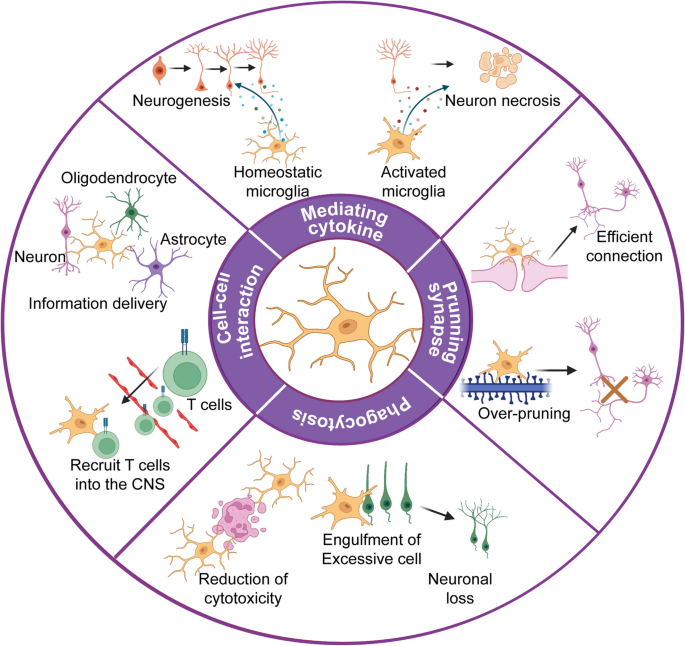
Neuroinflammation is an increasingly important area of Alzheimer's disease research. Microglia, astrocytes, inflammatory mediators, complement pathways, and immune-related genetic factors are being investigated for their potential roles in disease biology.
Microglial Activation and TREM2
Triggering receptor expressed on myeloid cells 2 (TREM2) is associated with microglial biology and immune responses in the central nervous system. Genetic studies have linked TREM2 variants to Alzheimer's disease risk, making this pathway an important area of research.
Investigations into TREM2 signaling, microglial states, cellular metabolism, and interactions with amyloid and tau may help identify new therapeutic targets.
Beyond Amyloid and Tau
Researchers are also investigating mitochondrial dysfunction, oxidative stress, synaptic alterations, vascular biology, lysosomal pathways, protein clearance, and metabolic mechanisms.
These research areas may contribute to a more comprehensive understanding of Alzheimer's disease and its biological heterogeneity.
Artificial Intelligence and Alzheimer's Disease Research
Artificial intelligence and machine learning are increasingly being applied to Alzheimer's disease research, particularly in biomarker discovery, imaging analysis, genomic interpretation, clinical data integration, and disease progression modeling.
AI-Based Brain Imaging
Machine learning models can analyze MRI and PET imaging data to investigate structural changes, patterns of amyloid deposition, regional tau distribution, and brain network alterations.
Predictive Biomarker Models
Computational models integrate molecular, imaging, demographic, and longitudinal datasets to investigate disease progression and biological risk patterns.
Drug Discovery
AI-assisted approaches support target identification, molecular screening, protein structure analysis, and investigation of drug-target interactions.
Digital Biomarkers
Speech analysis, wearable technologies, cognitive assessments, and digital behavioral measurements are being investigated for longitudinal research and monitoring.
What Are the Main Challenges in Alzheimer's Disease Research?
Despite major scientific advances, Alzheimer's disease remains biologically complex. Research continues to address important questions about disease onset, progression, heterogeneity, and the relationship between molecular pathology and clinical symptoms.
- Biological heterogeneity: Individuals may exhibit different combinations of amyloid, tau, vascular, inflammatory, and neurodegenerative processes.
- Early detection: Identifying biological changes before significant cognitive impairment remains an important research priority.
- Biomarker validation: New biomarkers require analytical validation, independent replication, and evaluation in relevant populations.
- Clinical trial design: Selecting appropriate participants, endpoints, disease stages, and follow-up periods remains challenging.
- Therapeutic targeting: Alzheimer's disease involves multiple molecular mechanisms, making it difficult to identify which pathways should be targeted and when.
- Translation: Findings from cellular models, animal models, and computational studies must be evaluated through rigorous clinical research.
The Future of Alzheimer's Disease Research: Precision Medicine and Molecular Neuroscience
The future of Alzheimer's disease research is increasingly focused on precision medicine, where biological characteristics, biomarkers, genetics, and disease stage may help guide research strategies.
Advances in blood-based biomarkers, single-cell transcriptomics, spatial omics, proteomics, neuroimaging, genome-wide association studies, and computational biology are creating new opportunities to characterize Alzheimer's disease at molecular and cellular levels.
Researchers are also exploring whether different biological subtypes may respond differently to targeted interventions. This could help improve participant selection, clinical trial design, and the development of complementary therapeutic strategies.
As molecular neuroscience continues to advance, integrating biological evidence with clinical and longitudinal data may provide a more comprehensive framework for investigating Alzheimer's disease.
Alzheimer's Disease: A New Era of Biomarker-Driven Research
Alzheimer's disease research is entering an important period of scientific innovation. New blood-based biomarkers, tau-targeting research, multiomics, genetic studies, AI-assisted discovery, and advances in molecular neuroscience are expanding our understanding of the disease.
The latest developments highlight the importance of investigating not only amyloid-beta and tau, but also neuroinflammation, genetic susceptibility, vascular biology, neuronal dysfunction, and other interacting molecular pathways.
The integration of biomarker research, genomics, proteomics, computational biology, and precision medicine may help scientists develop increasingly targeted strategies for investigating Alzheimer's disease and its biological mechanisms.
Continued scientific investigation will be essential to validate emerging biomarkers, understand disease heterogeneity, and translate promising discoveries into meaningful advances for patients and research communities.
Alzheimer's Disorder Research topics
Latest Scientific Publications and Research Sources
- NIH — New Alzheimer's Blood Test May Tell When Symptoms Are Around the Corner (2026)
- Nature Medicine — Blood-Based Circular RNAs for Early Diagnosis of Alzheimer's Disease (2026)
- Nature Neuroscience — Alzheimer's Disease Target and Drug Discovery by Leveraging Multiomics and Electronic Health Data (2026)
- Nature — Biofluid Biomarkers in Alzheimer's Disease and Other Neurodegenerative Dementias (2026)
- Alzheimer's Association — Phase 2 CELIA Clinical Trial Results for Tau-Targeting Therapy Diranersen (2026)
- Biogen — Five-Year Lecanemab Data from Clarity AD Long-Term Extension (2026)
- Nature — Latest Alzheimer's Disease Research and Scientific News
Scientific information presented in this article is intended for educational and research purposes. Investigational biomarkers and research findings should not be interpreted as established clinical diagnostic methods or treatment recommendations. Clinical decisions should be based on qualified healthcare professionals and applicable scientific and regulatory guidance.